
Better sight helps someone living with dementia stay safe and connected.
Sight and dementia are closely linked. A regular eye test can ease confusion, reduce falls and help a person make sense of the world around them - and our opticians are experienced in testing sight without relying on conversation.
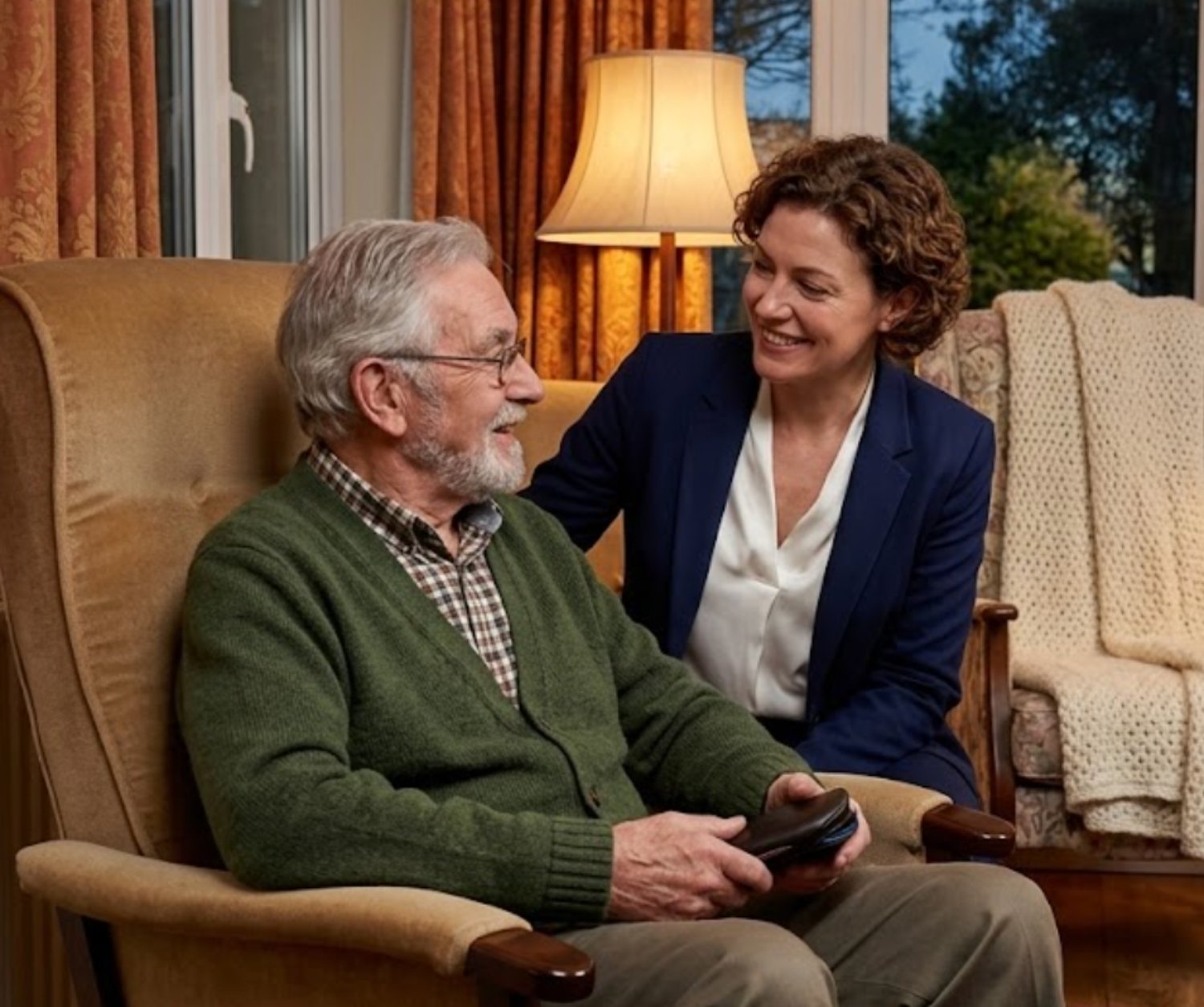
Is it worth testing the sight of someone living with dementia? Yes. As sight is a key sense, it's vital for everyone to have a regular eye test - and even more so with dementia. Better sight helps a person interpret their surroundings and navigate safely, which can reduce the disorientation dementia already causes. Our optometrists use objective testing methods, so a person doesn't need to read a chart or answer questions.
How dementia can affect eyesight.
Dementia doesn't only affect memory. Because much of what we "see" is actually the brain interpreting signals from the eyes, dementia can change how a person perceives the world - even when their eyes are healthy.
A person may find it harder to judge depth, tell colours apart, recognise faces, or make sense of patterns and reflections. This can be mistaken for confusion or "difficult" behaviour, when the real cause is a visual one that's often treatable.
On top of this, ordinary age-related conditions like cataracts, glaucoma and macular degeneration become more common with age - and a routine sight test can pick these up early, before they take more sight away.
Common visual difficulties
Signs a sight test might help.
Someone living with dementia may not be able to tell you their sight has changed. These everyday signs can be a prompt to arrange a check.
Stepping cautiously, reaching for support, or avoiding changes in floor colour.
Struggling to pick up a cup or cutlery, or missing when reaching for things.
Especially where food and plate are similar colours and hard to tell apart.
Or seeming startled when approached from the side.
Giving up hobbies they used to enjoy that rely on clear sight.
An old or lost prescription, or glasses that are scratched or the wrong strength.
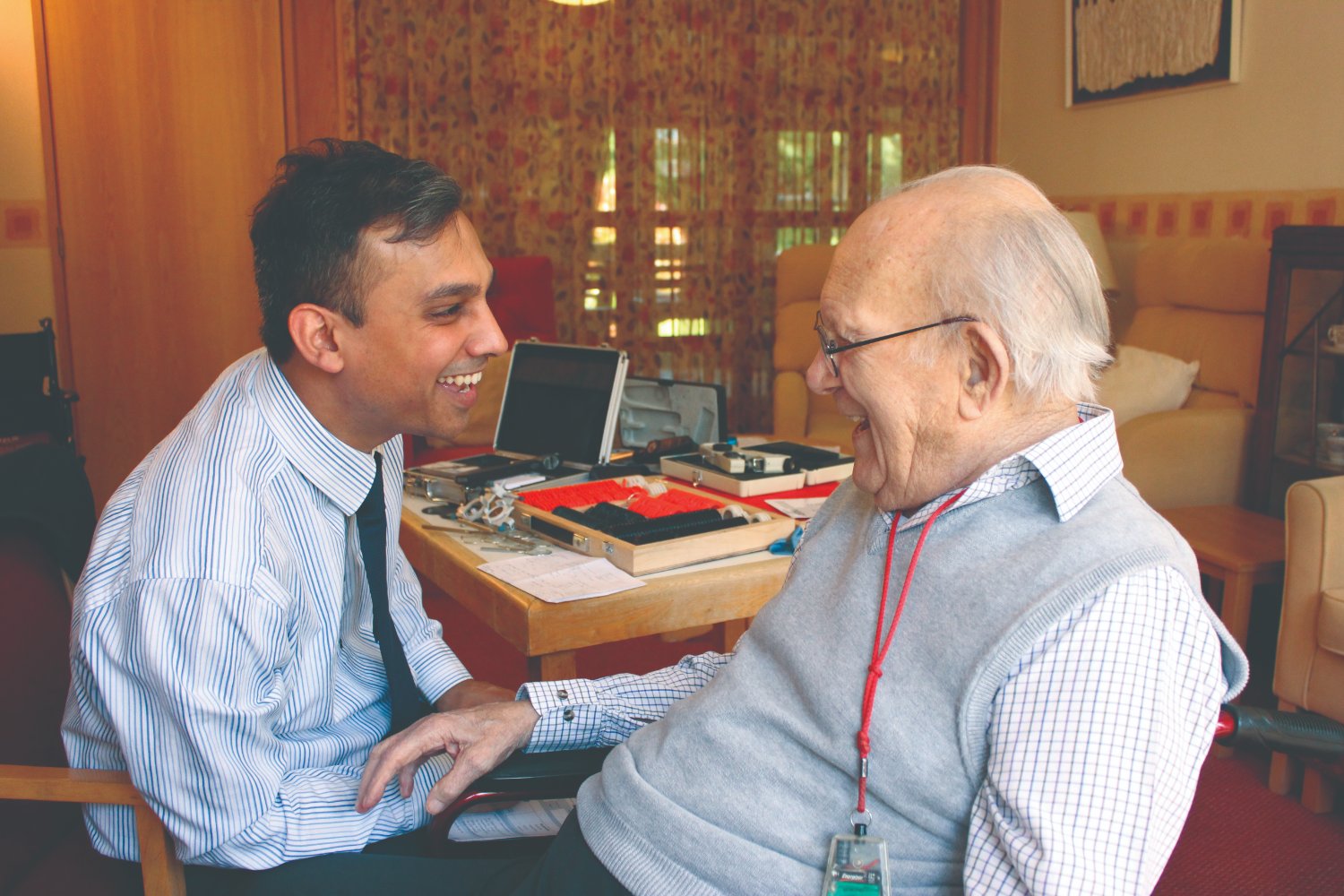
A sight test that adapts to the person.
Our optometrists are Dementia Friends certified and experienced in testing sight for people with limited communication or concentration. An eye test never relies on the person being able to read a chart or answer questions - we adapt to them.
We can measure the prescription and check for long or short sight by examining the eyes directly, without spoken responses.
Testing at home or in the care home - even at the bedside - keeps a person calm and comfortable.
We take time, work at the person's pace, and involve family or carers wherever it helps.
We can engrave frames for identification and provide a photo eyecare report, so glasses stay with the right resident.
Setting up the room helps. Where possible, we test in a room with good lighting and blinds or curtains that can darken it when needed, with about three metres of clear space in front of the person's chair or bed and access to a plug socket. We'll always guide you on what's needed beforehand.
Vision & dementia - your questions answered.
Can someone who doesn't communicate verbally still have an eye test?
Why do people in residential care especially need eye tests?
How often should the test be repeated?
What information helps our optician on the day?
Do you offer training for our care staff?
Arrange a dementia-friendly sight test.
Whether it's for a loved one or your residents, our team will visit at a time that suits, work gently at their pace, and keep families and carers informed.